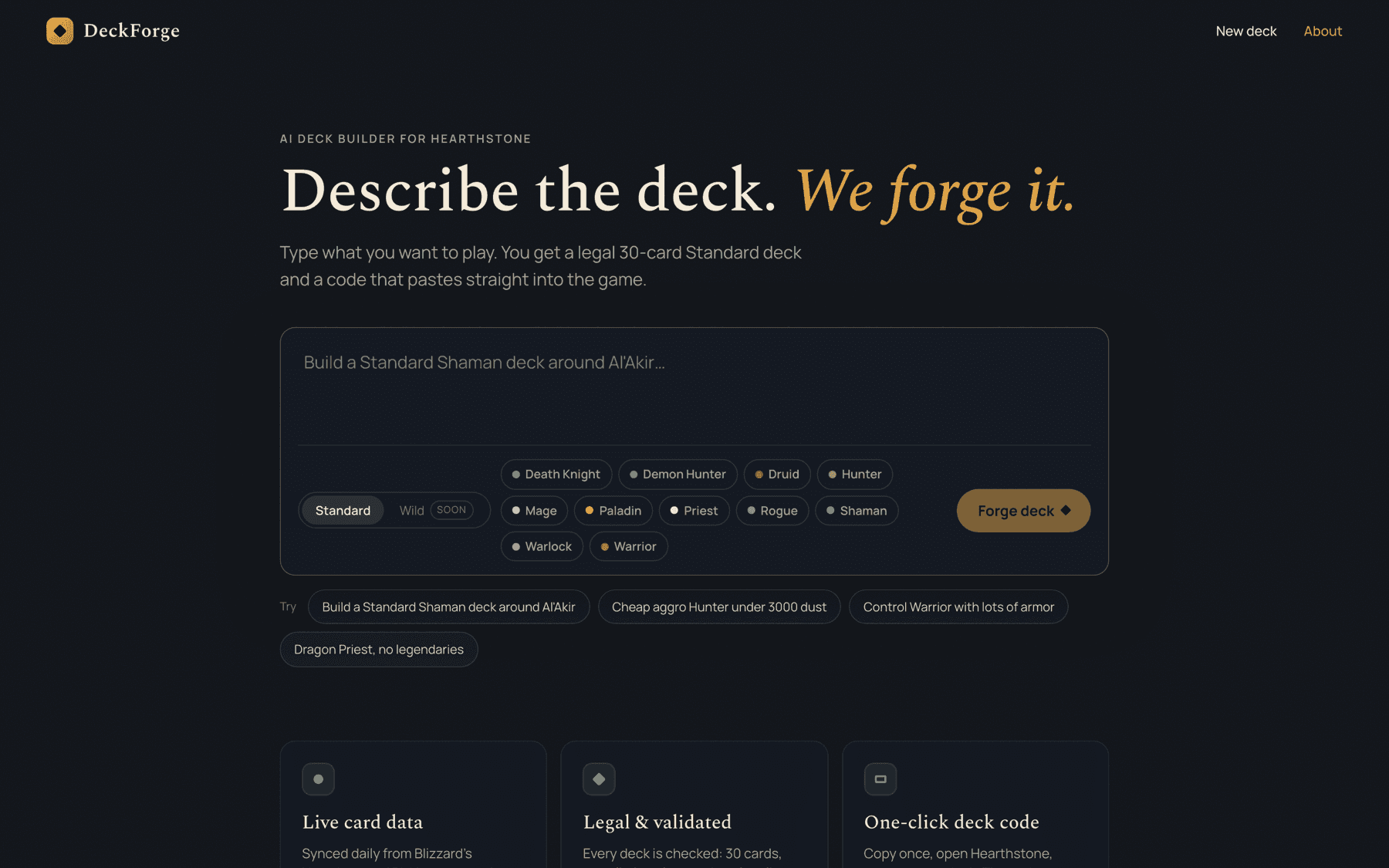
Describe the deck.
We forge it.
Type what you want to play — “Elemental Shaman around Al'Akir”, “cheap aggro Hunter under 3000 dust” — and get a legal 30-card Standard deck with a code that pastes straight into the game.
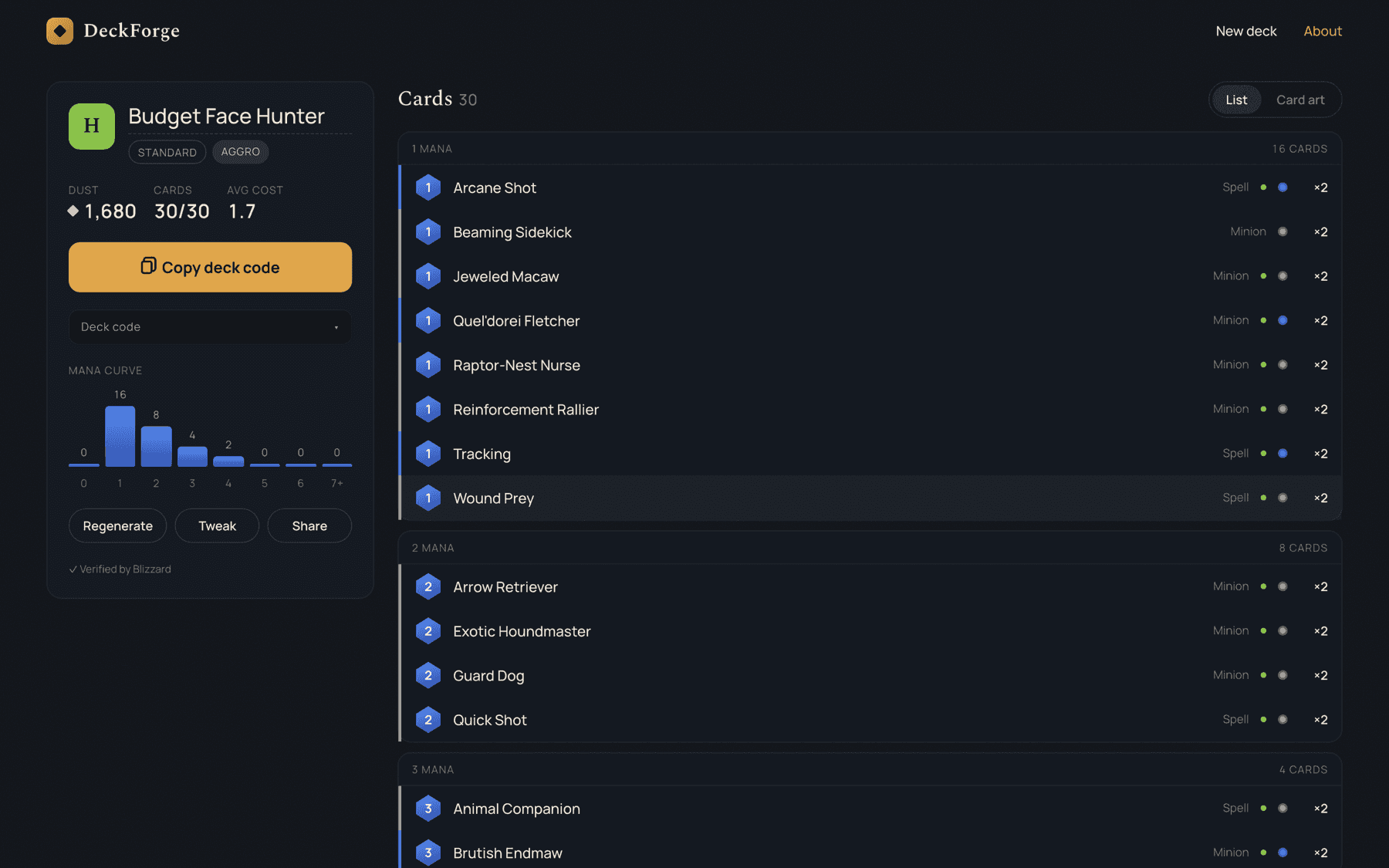
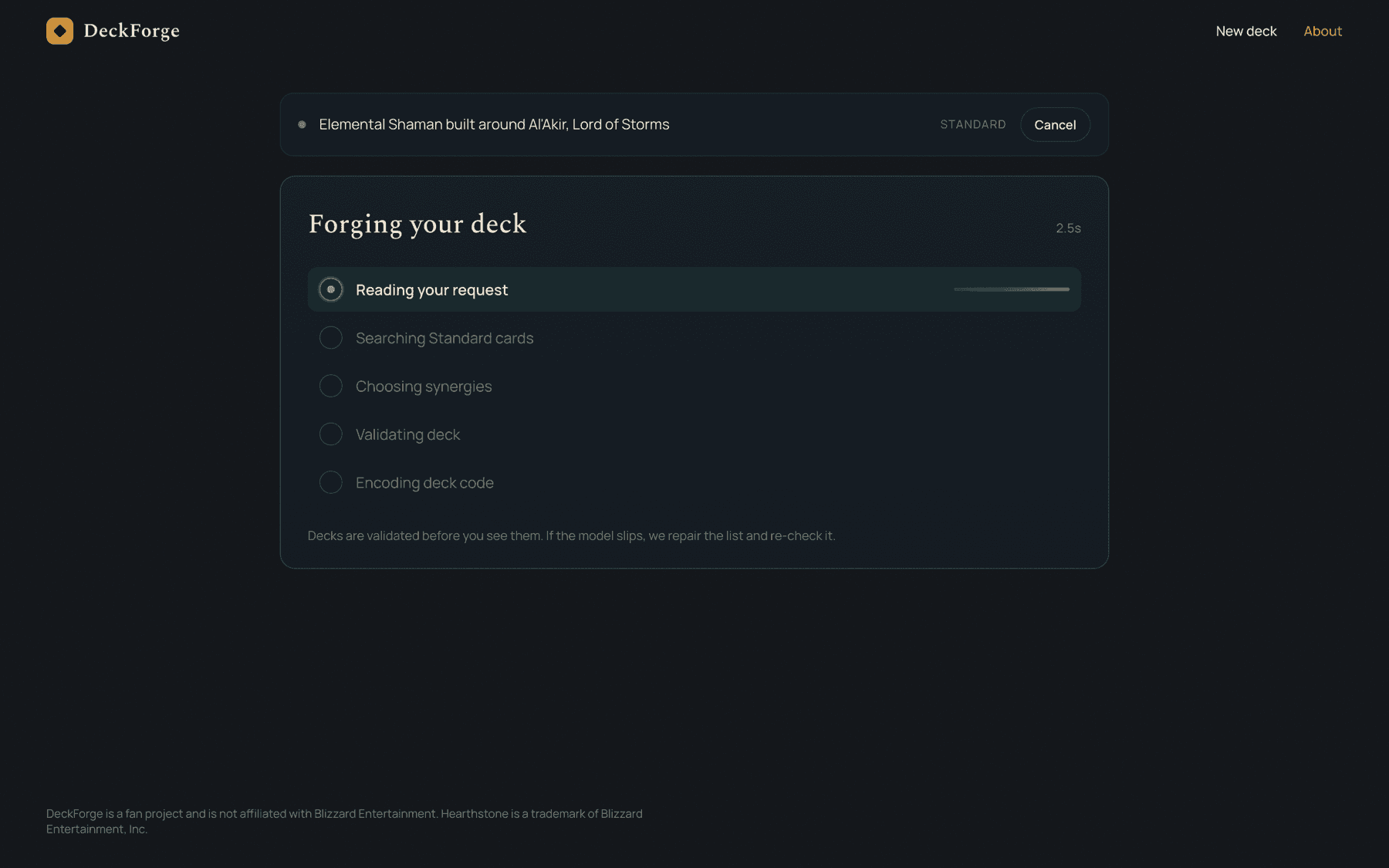
Five steps, one sentence.
The forge streams every step to the screen while it works. The model picks cards; the code decides whether they're allowed.
Decks are validated before you see them. If the model slips, the list is repaired and re-checked.
Built like a validator, not a chatbot.
The LLM never sees a card it doesn't get the text for, and the UI never sees a deck the validator didn't pass.
Live card data
Synced from Blizzard’s official API on every build. New expansions work the day they release — no retraining, no hand-written lists.
Legal & validated
A deterministic validator checks every deck before you see it. If the model slips, it gets two repair rounds, then code finishes the job.
One-click deck code
Copy once, open Hearthstone, create a new deck. The code is verified with Blizzard’s deck endpoint before it reaches your clipboard.
Explains itself
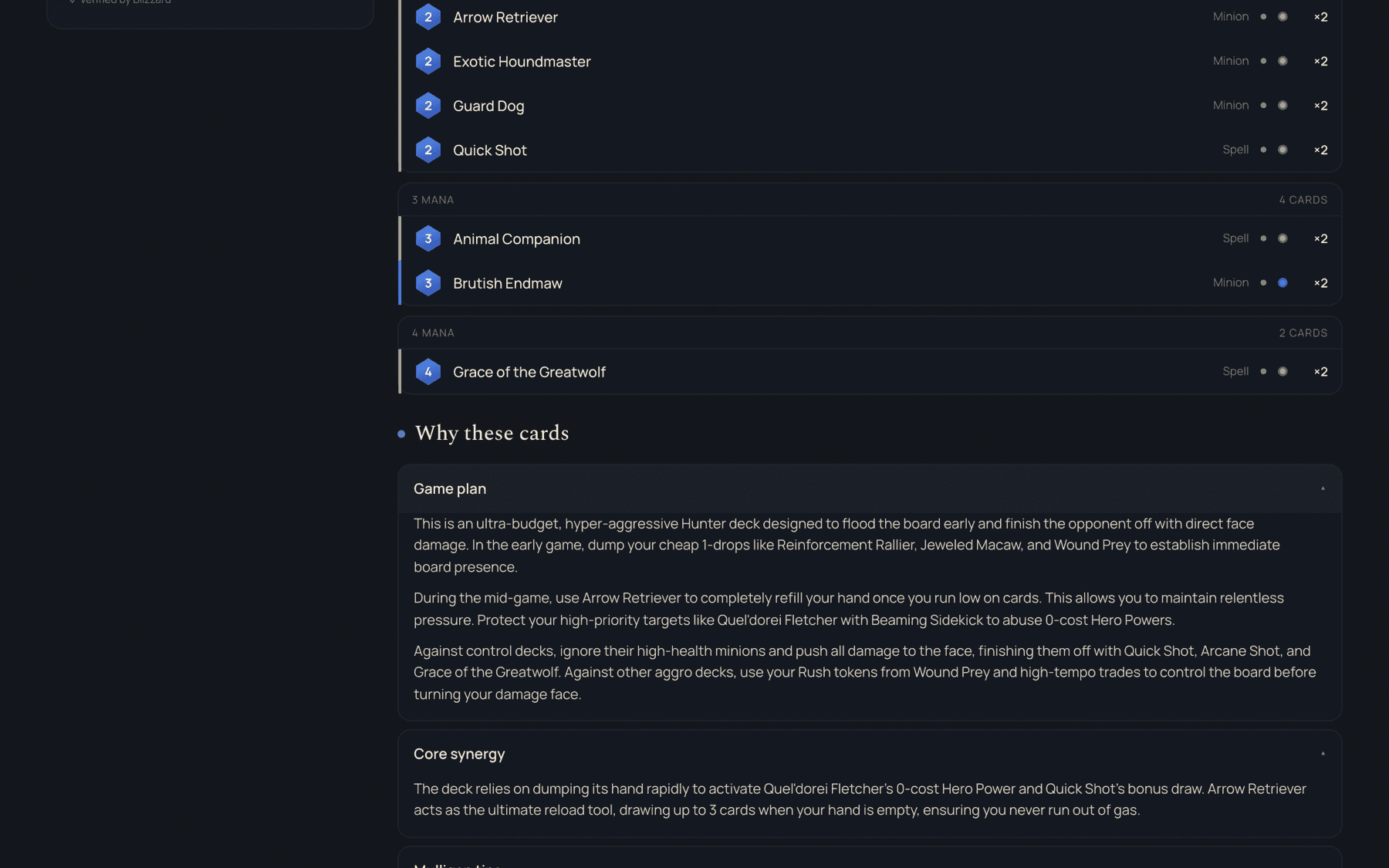
Game plan, core synergies, mulligan tips and suggested swaps come with every list, written against the real card text.
Refine in chat
“Make it cheaper”, “cut the legendaries”, “more removal”. Each edit shows a diff of what came in and out, and the dust delta.
Share with a link
The deck code is the URL. Share pages are rebuilt from the code and local card data — no database, nothing stored.
Every deck explains itself.
Game plan, core synergies, mulligan tips and suggested swaps come with the list. Tweak it in a chat, or share it with a link that needs no database.
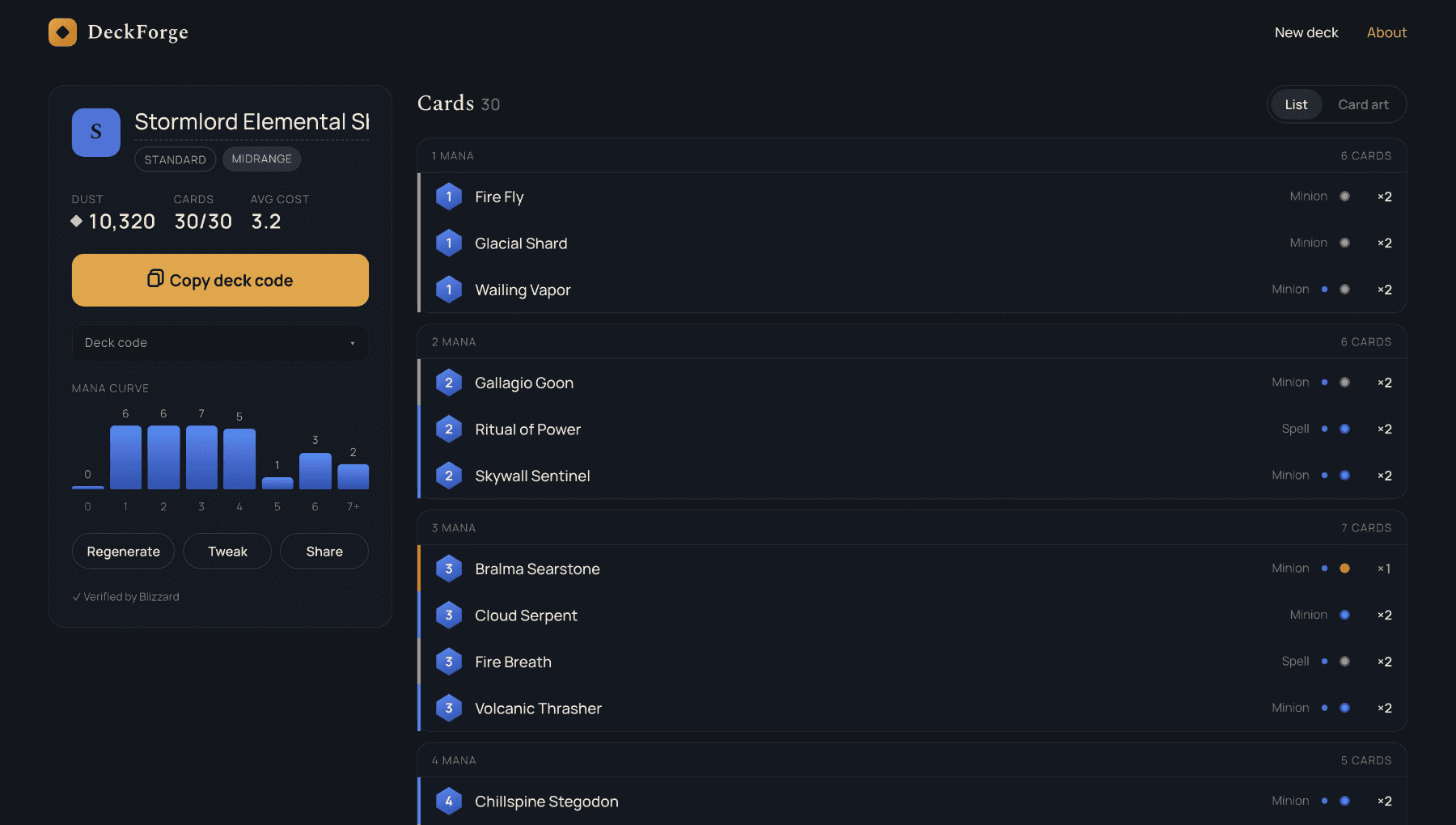
Card data is synced from Blizzard's official Hearthstone Game Data API on every build. Only released Standard sets are used — the game rejects codes that contain unreleased cards. Decks are encoded with the open deckstrings format and verified against Blizzard's deck endpoint. Open source, MIT.
Your next deck is one sentence away.
No sign-up. Type the deck, copy the code, open Hearthstone, create a new deck.
Open DeckForgeDeckForge is a fan project and is not affiliated with Blizzard Entertainment. Hearthstone is a trademark of Blizzard Entertainment, Inc.